
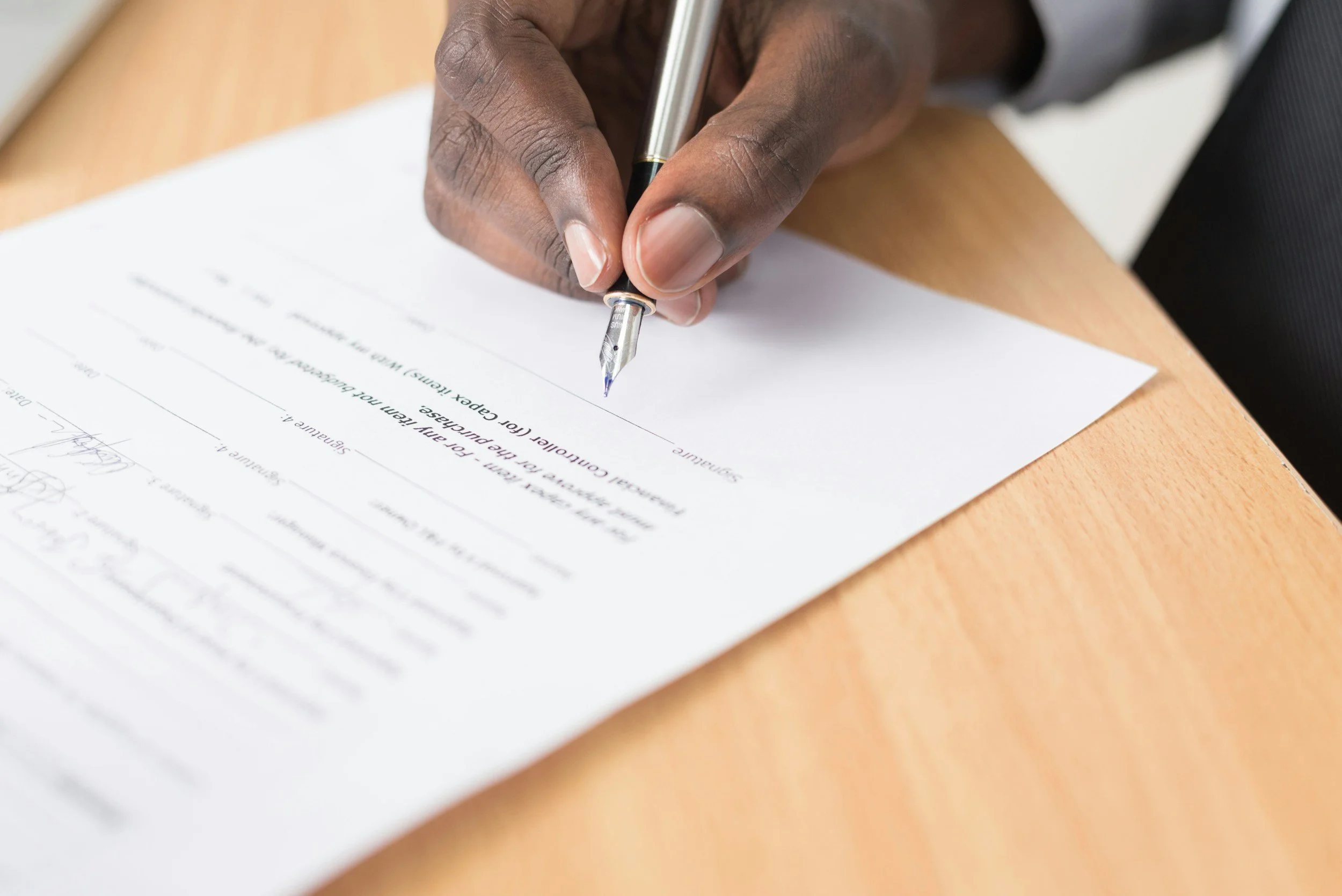
What to Know About Contracts and Your Business
As a business owner, contracts are the legal backbone of nearly everything you do — from hiring employees and engaging vendors to serving clients and entering partnerships. Yet many small business owners sign contracts without fully understanding what they're agreeing to. That can be a costly mistake.
Contracts Are Legally Binding — Even the Bad Ones
A contract doesn't have to be fair to be enforceable. Once you sign, you are generally bound by the terms — even if those terms are unclear, one-sided, or work against your interests. Courts typically interpret ambiguous contract language against the party who drafted it, but that's cold comfort when you're already in a dispute.
Understanding what you're signing before you sign is not optional. It's essential.
Every Business Contract Should Address These Key Elements
While contracts vary widely depending on the transaction, most business agreements should clearly define:
The parties involved — who is legally responsible for what
Scope of work or services — exactly what is being provided or exchanged
Payment terms — amounts, due dates, and consequences for late payment
Term and termination — how long the agreement lasts and how either party can exit it
Liability and indemnification — who bears risk if something goes wrong
Dispute resolution — whether disputes go to court, arbitration, or mediation, and in which jurisdiction
Missing or vague language in any of these areas is an opening for conflict.
Verbal Agreements Are Risky
Many small business owners rely on handshake deals, especially with people they trust. While verbal contracts can be legally enforceable in certain situations, they are extremely difficult to prove. When a dispute arises — and in business, disputes do arise — the absence of a written agreement leaves you with little to stand on.
Put it in writing. Every time.
Boilerplate Is Not One-Size-Fits-All
Downloading a generic contract template from the internet might seem like an easy solution, but standard templates are rarely tailored to your specific industry, state law, or business needs. A clause that protects a retailer in Texas may be unenforceable — or even harmful — for a service provider in another state.
Templates can be a starting point, but they should never be your finish line.
Contracts Should Evolve With Your Business
As your business grows, so do your legal exposures. A contract that worked when you were a one-person shop may be wholly inadequate as you scale, take on employees, or enter new markets. Reviewing and updating your standard agreements regularly is a sound business practice.
The Bottom Line
Contracts protect your business, your revenue, and your relationships — but only if they're properly drafted and clearly understood. Signing without reading, or reading without understanding, puts everything you've built at risk.
Ready to protect your business with contracts that actually work for you? Contact Okonkwo Law to schedule a consultation. We help small business owners navigate contracts with clarity and confidence.

Why can’t I just use ChatGPT for my business contracts?
Artificial intelligence tools like ChatGPT have transformed how people approach everyday tasks — writing emails, summarizing documents, generating ideas. It's no surprise that business owners are now turning to AI to draft contracts. It's fast, it's free, and the output often looks polished and professional.
The problem is that looking like a contract and functioning as one are two very different things.
AI Doesn't Know Your State's Law
Contract law is not uniform across the United States. What's enforceable in one state may be void in another. Non-compete clauses, for example, are enforceable in some states and largely prohibited in others. Certain consumer protection provisions, arbitration requirements, and limitation of liability clauses are similarly state-specific.
ChatGPT generates responses based on general patterns in its training data. It does not know whether the clause it just drafted is valid where you do business — and it won't tell you when it isn't.
AI Doesn't Know Your Business
A well-drafted contract is tailored to the specific transaction, the parties involved, and the risks unique to your industry. A contract for a freelance graphic designer looks very different from one for a construction subcontractor, a commercial landlord, or a healthcare vendor.
AI tools generate generic output. They don't know whether your payment structure is milestone-based or retainer-based, whether you're working with government entities subject to special regulations, or whether your industry has standard clauses that are conspicuously absent from the document it just produced.
Generic is not the same as appropriate. And in contract law, the difference matters.
The Gaps Are the Problem
Perhaps the greatest risk in AI-drafted contracts isn't what's wrong — it's what's missing. Contracts often fail not because of a bad clause, but because of a missing one. What happens if the other party doesn't pay? What if work is delivered late? Who owns the intellectual property? What's the process if there's a dispute?
AI may produce a document that covers the obvious points while leaving critical protections entirely unaddressed. You won't know those gaps exist until you're in a situation where they matter most.
False Confidence Is Dangerous
One of the subtler risks of AI-generated contracts is that they appear authoritative. The language sounds legal, the structure looks familiar, and business owners often assume that if it looks right, it must be right.
That assumption can be expensive. A contract that gives you false confidence may cause you to skip legal review, proceed with a deal you shouldn't, or fail to negotiate terms that could have protected you.
AI Is a Tool, Not a Lawyer
This isn't an argument against using technology in your business. AI tools can be genuinely useful for drafting first-pass language, identifying questions to ask, or understanding general concepts. But they are not a substitute for legal advice tailored to your specific situation.
A licensed attorney brings legal knowledge, professional judgment, and accountability. If an attorney makes a mistake, there are mechanisms for recourse. If ChatGPT produces an unenforceable contract, there are none.
The Bottom Line
Using ChatGPT to draft your business contracts is a shortcut that can cost far more than it saves. The investment in proper legal drafting is an investment in the security and stability of your business.
Don't leave your business exposed. Okonkwo Law drafts and reviews contracts for small business owners who want real protection, not a polished document with hidden gaps. Contact us to get started.

The Importance of Having an Attorney Review Your Contract
You've worked hard to build your business. A poorly written — or poorly understood — contract can undo that work in ways you never anticipated. Having an attorney review your contracts before you sign is one of the most practical investments a business owner can make.
You Don't Know What You Don't Know
Most business owners are experts in what they do — not in contract law. And that's completely reasonable. But contracts are legal documents with real consequences, and the language in them is often deliberately technical. Terms like "indemnification," "limitation of liability," "force majeure," and "liquidated damages" carry specific legal weight that isn't always obvious from plain reading.
An attorney doesn't just read a contract — they interpret it in the context of applicable law, your industry, and your specific circumstances.
What an Attorney Looks For
A contract that looks straightforward on the surface can contain provisions that significantly shift risk to your side. During a contract review, an experienced attorney will look for:
One-sided termination rights — clauses that allow the other party to exit at will while locking you in
Uncapped liability — provisions that expose your business to unlimited financial risk
Overly broad indemnification — language requiring you to cover losses you didn't cause
Automatic renewal clauses — terms that extend the contract without explicit notice
Unfavorable dispute resolution — mandatory arbitration in another state, or waiver of your right to a jury trial
Missing protections — what the contract doesn't say can be just as dangerous as what it does
These are the kinds of issues that aren't visible to an untrained eye until it's too late.
The Cost of Skipping a Review
Business owners sometimes avoid attorney reviews to save money. But the cost of a contract dispute — litigation, lost revenue, damaged business relationships, or being locked into an unfavorable arrangement — almost always far exceeds what a review would have cost upfront.
A single overlooked clause has derailed businesses that took years to build.
Not All Contracts Carry the Same Risk
Not every agreement requires the same level of scrutiny. A short vendor invoice with standard terms is different from a multi-year service agreement or a commercial lease. An attorney can help you quickly assess which contracts warrant a thorough review and which are lower risk — so you can allocate your time and resources wisely.
Negotiation Starts With Understanding
Having an attorney review a contract also puts you in a stronger negotiating position. Most contracts are not take-it-or-leave-it documents. They are starting points. Once you understand what's in an agreement — and what should be — you can push back, request changes, and arrive at terms that actually protect your interests.
Informed negotiation is a business advantage.
The Bottom Line
A contract review isn't a luxury for large corporations. It's a practical safeguard for any business that wants to operate with confidence, avoid costly surprises, and build relationships on clear, fair terms.
Before you sign your next contract, let us take a look. Okonkwo Law provides contract review services tailored to small business owners. Contact us today to schedule a consultation.